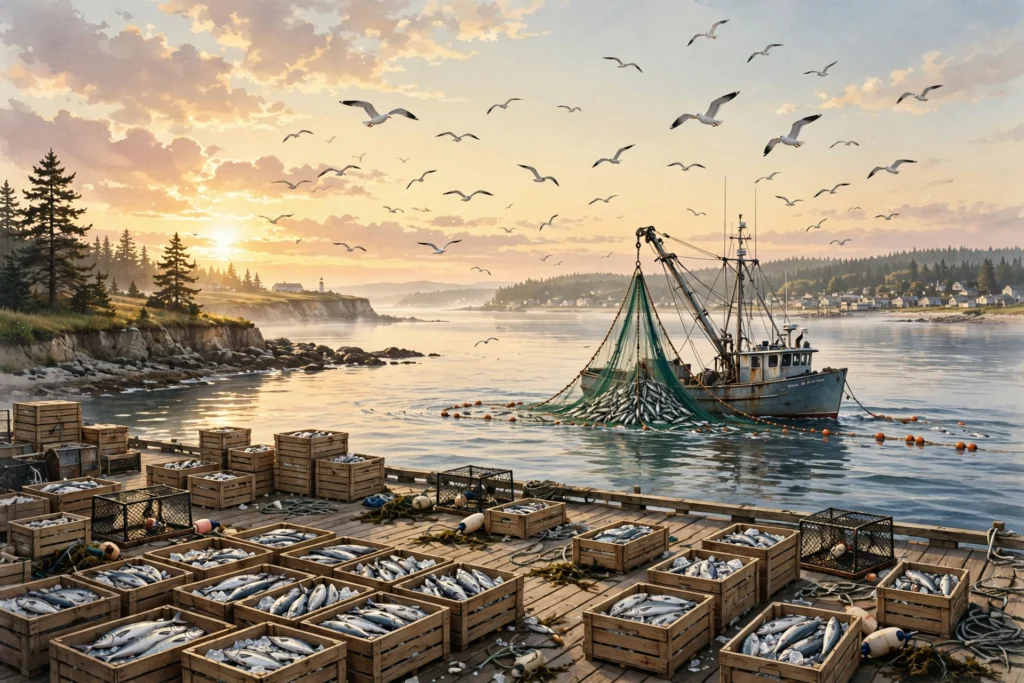
White House News: Trump Unveils America First Seafood Plan
In the latest white house news from Washington, the Trump administration has unveiled the America First Seafood Strategy, a plan to rebuild the country’s commercial fishing industry, and launched a new federal website, Seafood.gov, as a single home for fishermen and shoppers seeking information about American seafood. The Food and Drug Administration is also proposing a voluntary “U.S. Caught Seafood” label, so consumers can tell at a glance whether the fish they are buying was caught by American fishermen. The announcement, made on October 23, is the administration’s most detailed statement yet on an industry that supplies a small fraction of what Americans eat, and it comes with more than five billion dollars in government-backed loans for meat and seafood processing.
The plan was announced by Health Secretary Robert F. Kennedy Jr. at a political rally in Fort Myers, Florida, alongside President Donald Trump, and the White House published a formal fact sheet the same day. It follows an executive order on seafood competitiveness that Trump signed in April 2025, giving that order a concrete programme: regulatory reform, infrastructure investment, stronger import enforcement, and a marketing push to persuade Americans to buy domestic catch. For coastal communities that have watched their share of the American seafood market shrink for decades, the strategy is a significant statement of intent — even though the administration stresses that it relies on existing laws and programmes rather than new spending.
What the America First Seafood Strategy Promises
The White House fact sheet describes American fishermen as essential to the country’s economic strength, food security, coastal prosperity, and national resilience, and the strategy is built around making their work more profitable. Its central promise is to rebuild the infrastructure the industry depends on, by reducing the regulatory barriers that slow the expansion and modernisation of processing plants, cold storage, docks, and shipyards. The administration argues those facilities are the bottleneck for the whole sector: without modern plants and storage, fishermen cannot land more catch, and without investment, coastal towns lose the jobs processing provides.
That infrastructure argument matters most where fishing is the economic foundation of the community. The fact sheet notes that processing jobs provide the primary source of income for hundreds of rural communities in Alaska, where the fishing season shapes the entire local economy. In Maine, where the lobster fishery is the state’s most valuable, the strategy promises specific help restoring profitability and protecting fishermen from unfair competition — presenting the plan as a response to named communities rather than an abstract trade policy.
The plan also reaches into how fishing is managed. The National Oceanic and Atmospheric Administration says it will work with the regional fishery management councils so that catch limits track the best available science, reopening productive grounds where the data support it and pursuing targeted reforms that cut compliance costs which do not serve conservation. The agency plans clearer standards for offshore aquaculture permitting, streamlined permitting for shoreside facilities, and a review of the Fisheries Finance Program and the Capital Construction Fund to make it easier to replace ageing vessels — a sustained attempt to lower the cost of doing business for American fishermen.
The Voluntary “U.S. Caught Seafood” Label
For shoppers, the most visible part of the announcement is the proposed label. The Food and Drug Administration is proposing a voluntary “U.S. Caught Seafood” label that American fishermen and processors can use to identify seafood caught by American crews. The label is already available for download on Seafood.gov, and the administration hopes it will become a familiar sight in supermarkets and fish markets, giving consumers a quick way to choose domestic product.
The label is voluntary, and that distinction shapes how it will work. No fisherman, processor, or retailer is required to use it, and the administration has announced no new restrictions on imported seafood. Its reach will therefore depend on how many producers and sellers adopt it, and on whether shoppers trust it as a reliable signal of origin. The White House has not yet detailed a timeline for turning the proposal into a final standard, nor eligibility rules or verification requirements.
The case for the label rests on a simple observation: most shoppers cannot tell where their fish comes from. Seafood passes through long supply chains, and the labels attached to it are not always reliable. A federal label, backed by the Food and Drug Administration, would give domestic producers a marketing tool imports cannot claim, and consumers a choice they do not clearly have today. Supporters argue that even a voluntary label changes the economics, because it lets fishermen who follow American rules charge for the fact that they do.
The administration is pairing the label with a national “Eat American Seafood” campaign and a commitment to buy more American seafood for government programmes. The campaign is meant to build consumer demand that makes the label worthwhile for producers, while government purchasing provides a guaranteed market. Seafood.gov sits at the centre of that effort: a one-stop destination where fishermen and consumers can find clear information about federal seafood initiatives and the health and science case for choosing American catch.
Why Washington Says the Industry Needs Help
The numbers explain why the administration sees the industry as a problem worth solving. Roughly eighty percent of the seafood consumed in the United States is imported, according to government data, and the imbalance is stark in dollar terms: domestic catch is worth about 5.1 billion dollars a year, while foreign imports total nearly 25 billion dollars. That gap has grown over decades as American fleets have faced higher costs, stricter rules, and competition from countries where labour and regulation are cheaper.
Fraud makes the problem worse. Mislabelled and illegally caught foreign seafood enters the American market, undercutting domestic fishermen who follow quotas, seasons, and conservation rules. The strategy promises to sharpen the Seafood Import Monitoring Program, which tracks imports, and to strengthen import certification and compliance. Those measures target the same problem Congress addressed on October 15, when Trump signed the Illegal Red Snapper and Tuna Enforcement Act into law, directing the National Oceanic and Atmospheric Administration to develop chemical tests tracing a fish to its country of origin. The testing law and the new strategy are two parts of one enforcement push: one builds a scientific tool for catching fraud, the other gives honest fishermen a label proving where their catch came from.
The administration also frames the issue in terms of food security and national resilience. A country that imports four-fifths of its seafood depends on foreign supply chains for a basic foodstuff, and the strategy’s language about fishermen being essential to national resilience presents fishing as a strategic industry rather than a niche concern. That framing connects the seafood plan to the administration’s broader trade and industrial policy, which argues that American production should be protected and rebuilt across sectors.
The April 2025 Order Behind the Plan
The strategy implements the plan of action called for in the executive order on seafood competitiveness that Trump issued in April 2025, and the National Oceanic and Atmospheric Administration has described it as the public form of that order. The order directed agencies to find ways to grow the American harvest and processing, and the strategy is the answer they have produced after eighteen months of work.
The April order was part of a wider push to open American waters to commercial fishing. In the same month, Trump issued a proclamation allowing commercial fishing within the Pacific Islands Heritage Marine National Monument, and the administration has directed fishery councils to develop new opportunities in other protected Pacific waters. Conservation groups have criticised those moves, arguing that opening marine monuments threatens endangered species and fragile ecosystems. The administration counters that American fishermen should not be locked out of American waters while foreign fleets fish with fewer constraints.
The new strategy sits somewhat apart from that fight, because it is a support and enforcement programme rather than a deregulation measure. But it shares the same logic: tilting the playing field back toward domestic fleets. Cracking down on illegal foreign seafood, giving American catch a visible label, and opening domestic waters to American fishermen are, in the eyes of the plan’s supporters, three sides of the same coin.
Reactions From the Docks and the Questions Ahead
Industry reaction has been broadly positive. The New England Fishermen’s Stewardship Association, which represents fishermen in one of the country’s oldest fishing regions, welcomed the plan as a critical step toward rebuilding American fishing infrastructure and market transparency. For groups that have spent years arguing that the federal government neglects the industry, the strategy’s attention to permitting, financing, and import enforcement is a welcome change.
The questions that remain are practical. Because the label is voluntary, its value will depend on uptake: if few producers use it, shoppers will rarely see it, and its marketing advantage will be theoretical. If many use it, the administration will need a credible verification system to stop it being attached to fish that does not qualify. The Food and Drug Administration has not said how quickly it will finalise the standard, what evidence a fisherman will need, or who will police misuse — decisions that will determine whether the label becomes a trusted mark or a decorative badge.
There are also questions about the five billion dollars in guaranteed loans. The White House says the money is available through the Department of Agriculture for meat and seafood processing, but guarantees are not spending: they depend on processors applying, qualifying, and investing. The promised review of the Fisheries Finance Program and the Capital Construction Fund is meant to make that easier, but results will only be visible when new plants and vessels appear.
What Happens Next for American Fishermen
The immediate next step is implementation, and the administration has been candid that details will emerge through fishery council actions and rulemaking over the coming months. The National Oceanic and Atmospheric Administration will work with the councils on catch limits and regulatory reform, the Food and Drug Administration will develop the label into a usable standard, and the Department of Agriculture will administer the loan guarantees.
For fishermen, the stakes are concrete. A federal label could offer a marketing edge domestic catch has lacked, but participation may bring paperwork and compliance checks smaller operators weigh carefully. Streamlined permitting could cut years from building a new processing plant, but only if the reforms survive rulemaking. Stronger import enforcement could raise prices for domestic catch, but only if the monitoring programme can actually catch mislabelled imports.
For consumers, the change will arrive gradually, as a label on a package or a new section on Seafood.gov. Whether shoppers choose American seafood when they can identify it — and whether they will pay for it — is the question the whole strategy ultimately depends on. The administration has placed its bet: that Americans, given a clear choice, will buy American fish. The next year will show whether the bet pays off, and whether a voluntary label and five billion dollars in loans are enough to close a gap that took decades to open.
Source: FOX 10 Phoenix